Antecedence matters.
In the Bible, John 10:22-42 describes Jesus being stoned for blasphemy. Modern translations have Jesus calling himself “the son of God”. But it can equally be “a” “son of God”.
When he is being stoned for blasphemy for calling himself “son of God”, modern translations say:
34 Jesus replied, “It is written in your own Scriptures that God said to certain leaders of the people, ‘I say, you are gods!’
35 And you know that the Scriptures cannot be altered. So if those people who received God’s message were called ‘gods,’
36 why do you call it blasphemy when I say, ‘I am the Son of God’? After all, the Father set me apart and sent me into the world.
37 Don’t believe me unless I carry out my Father’s work.
38 But if I do his work, believe in the evidence of the miraculous works I have done, even if you don’t believe me. Then you will know and understand that the Father is in me, and I am in the Father.”
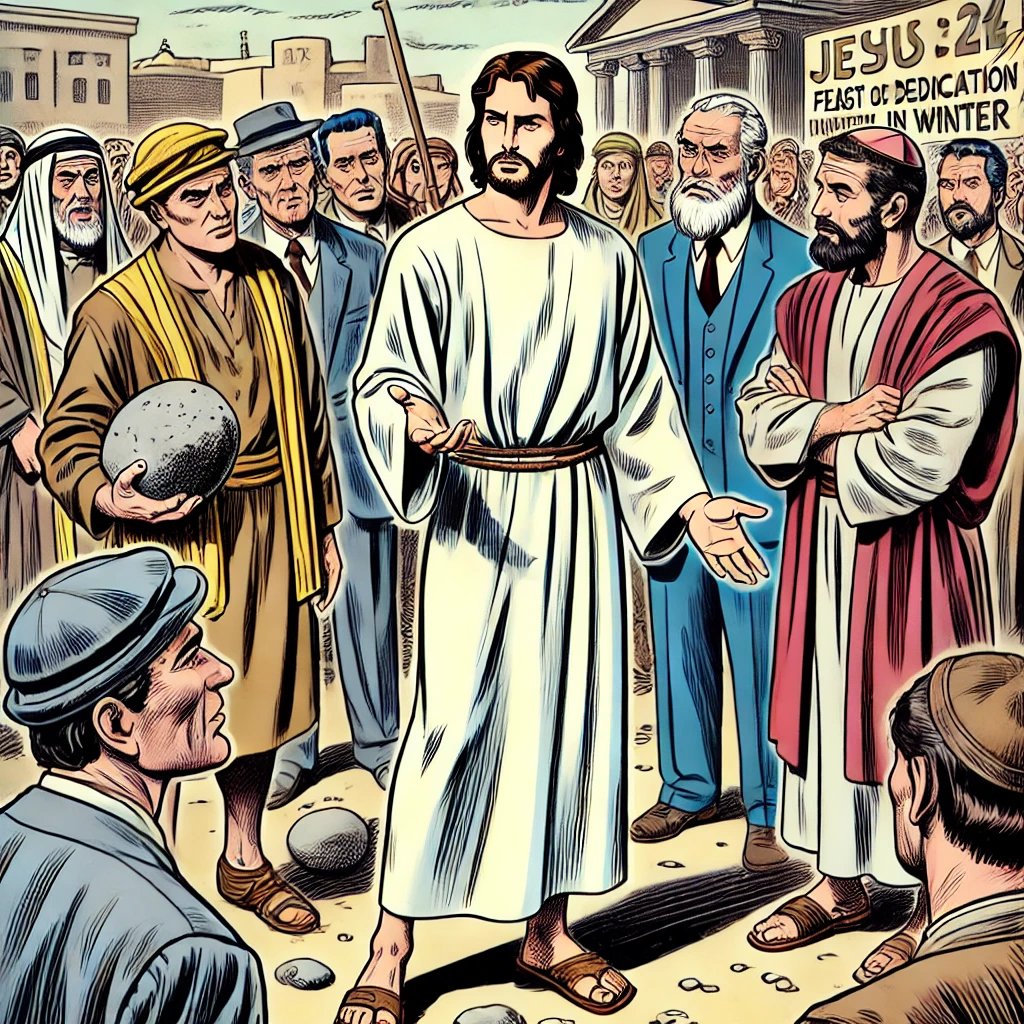
Is this the Chinese whispers of interpretation, translation, and interpolation?
The line “why do you call it blasphemy when I say, ‘I am the Son of God’?” is also translatable as “why do you call it blasphemy when I say, ‘I am a Son of God’?”.
Later generations have taken an individualist, egocentric interpretation of these passages. But there’s actually a lot of difference if we take “a” rather than “the”. If we take “a”, Jesus is saying that he is one of many. Indeed, the passage of the scriptures quoted by Jesus refers to everyone being gods. So Jesus is maybe saying – “Hey, I’m like any of us, a son of God”. Where “son of” means “of the nature of” or “comes from”, like we say “son of a bitch”. Of course, when we say “son”, in modern times we would replace this with the gender neutral “sibling of”.
Given this interpretation, we can also see that “Father” can be seen as “God”. For example, the “gods” that we are all part of. If you replace “Father” with “Universe”, you see the passage still works, but takes on an interesting meaning. For example, seeing “Father” more as the Hindu Brahman or Spinoza’s eternity:
36 why do you call it blasphemy when I say, ‘I am a Son of God’? After all, the God/Universe [set me apart] and sent me into the world.
37 Don’t believe me unless I carry out that God/Universe’s work.
38 But if I do its work, believe in the evidence of the [miraculous] works I have done, even if you don’t believe me. Then you will know and understand that the God/Universe is in me, and I am in the God/Universe.”
We can also see some room for interpretation in the phrases “set me apart” and “miraculous”.
The standard interpretation of “set me apart” is “made me special”. This is attractive to egotistic Western ears. But “set me apart” can mean that the “God/Universe” become “me” with the appearance of a separate object. This is an integral part of being born and entering into the Universe.
Similarly, “miraculous” is often interpreted as “supernaturally amazing”. It can also be a description of the superlative nature of the deeds Jesus chose to undertake. Helping and caring for others, loving others. Is that not “miraculous” in the often violent brutal world of the Bible? These “works” or “acts” do not need to be supernaturally brilliant. They can be brilliant without defying the laws of physics. They can be brilliant in a way accessible to any one of us. Any one of us gods. This can be taken further – if we are all gods, they surely everything we do is miraculous?
With just some small changes, we get quite a different interpretation of what Jesus was and what he was saying. An interpretation that is more consistent with Eastern and Asian philosophies. An interpretation that is more accessible to all of us. For what is not the ultimate blasphemy but to say we are all as holy as the holiest God? To say that all of us are special, are capable of great things at all times. That nothing special or “extra” is required, no special ranking of birth or office. That we can be miraculous whoever we are and wherever we are. That are worth is the same as the next person. That is truly revolutionary, and scary for most of us. And didn’t Jesus show this? By tending to the sick and poor? By hanging out with undesirables and reprobates? By constantly shunning title and glory?
And what if the truly holy thing in the whole of Christianity is that Jesus did die on the cross? Die like a common criminal or politic prisoner. Die like all of us will at some point. What if the resurrection is the tacked on lie that negates the true miracle?

 Robotic Ape