This started as an email to some folks I’ve been mentoring. It’s the detritus that collects over 25-odd years of a professional life in AI. Don’t feel obliged to read or act on any of it but if you’re early in your career and interested in AI, something here might be useful.
On Networking (or: Doing Stuff You Enjoy With People You Don’t Want to Kill)
A significant part of building a good, fulfilling career is developing a network of connections.
“Networking” is really just doing stuff you enjoy or solving problems with folks you don’t want to kill. It should be an end in itself. There’s never a “perfect” time to start, and the earlier you start the better – networks compound.
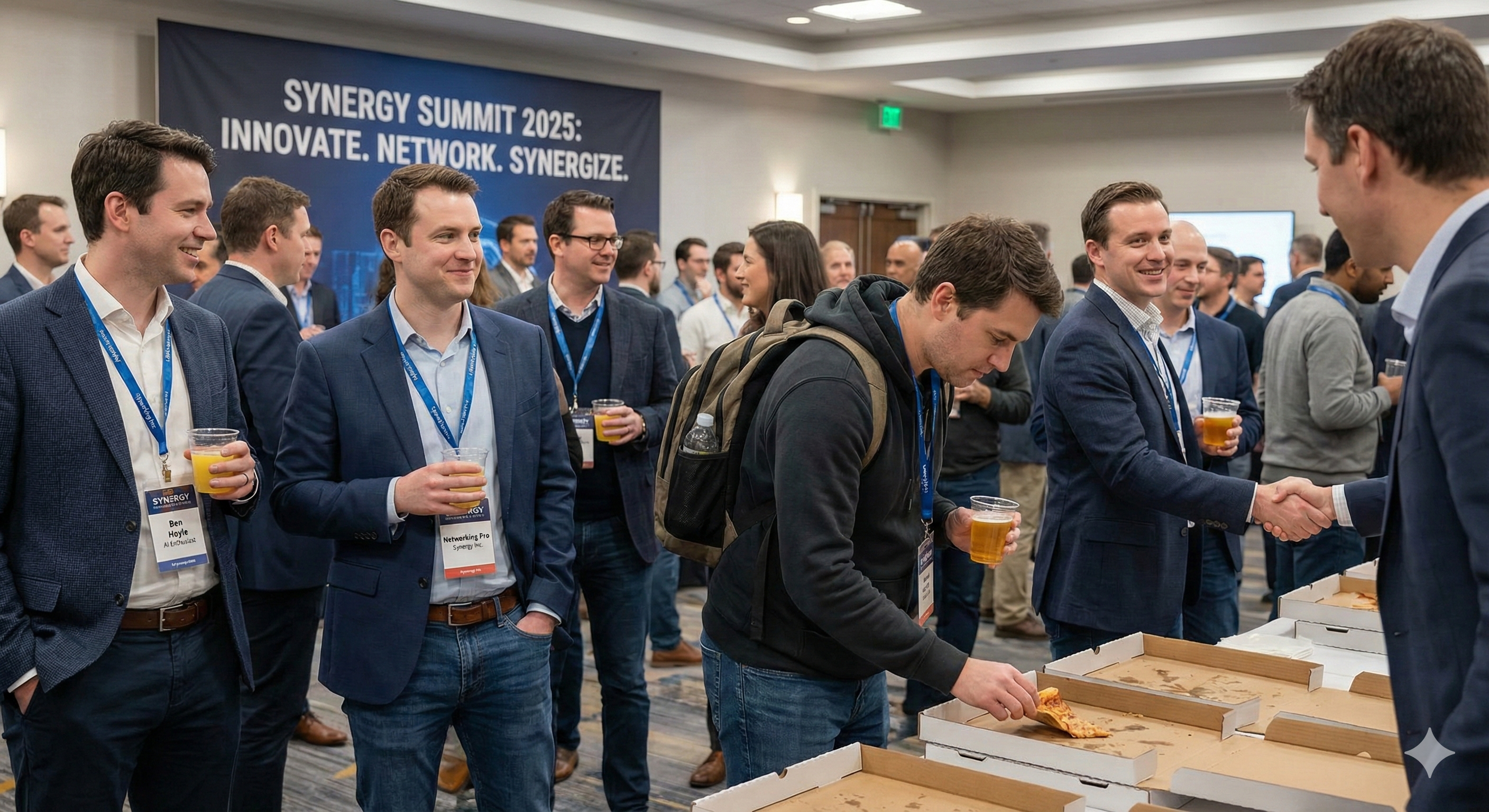
My networking advice is set out below.
Get Your Online Presence Sorted
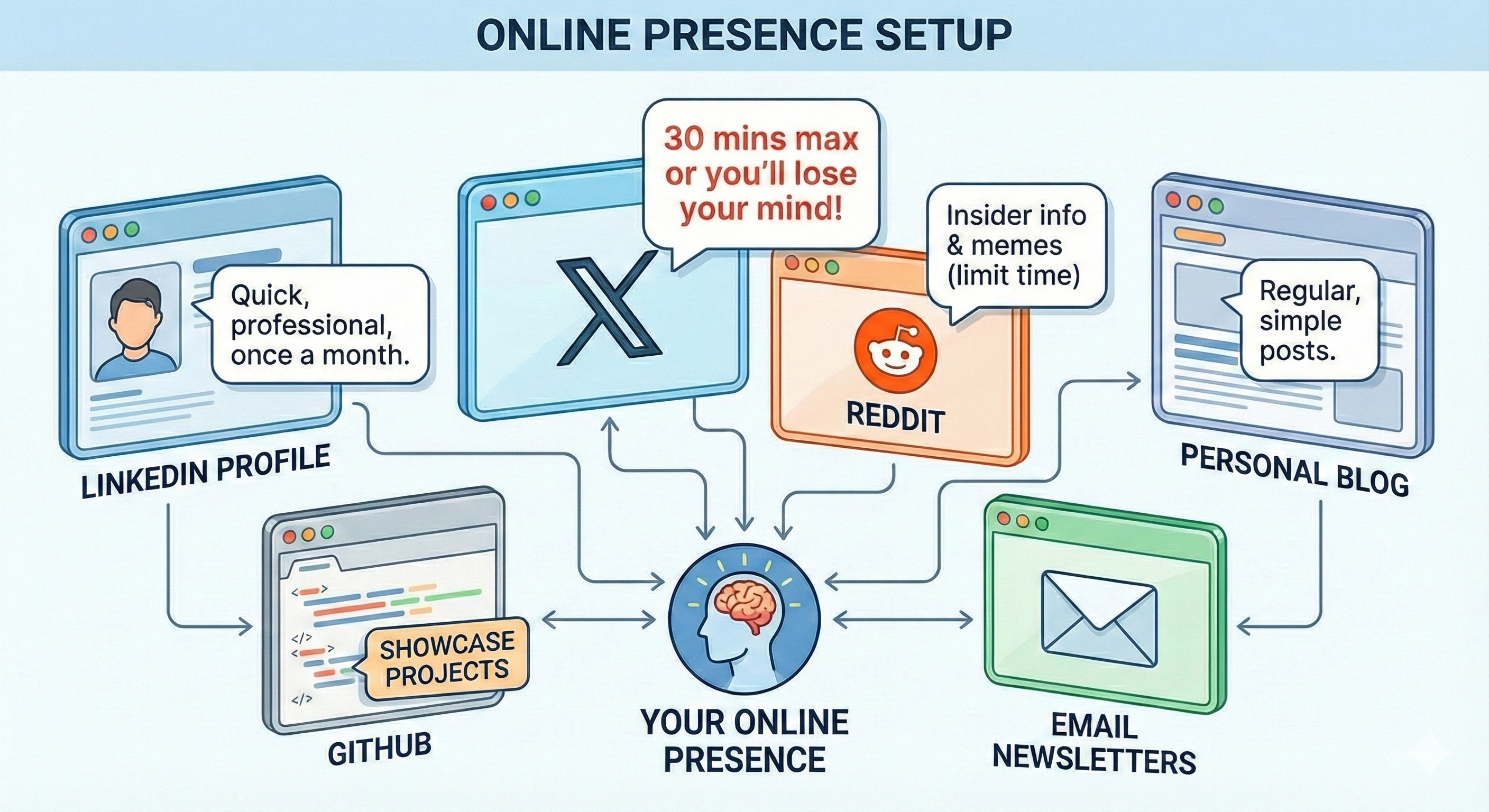
LinkedIn:
- Set up a profile with a photo and some basic information.
- Post something short and interesting relating to your work or projects roughly once a month.
- Don’t pay too much attention to posts of others (the marketing tone will make you go mad), but 15 minutes can get you a basic working profile.
- Use Gemini or similar to create a “LinkedIn headshot” from some crappy selfies.
- Here’s mine as an example.
- I often spot SMEs and start-ups connected with folk I’ve worked with posting for interns and junior developers on LinkedIn – it’s a good place to spot openings.
GitHub:
- Set up a profile with a photo and some basic information.
- Link it to your LinkedIn.
- Aim for 4-5 decent public projects by university end.
- Stick any university course projects on there.
- You get free stuff with a university email address.
- My account is fairly basic; Armin Ronacher’s shows what a more active presence looks like.
X (formerly Twitter):
- Yes, it’s full of Nazis, but there’s still a small core of AI researchers there, so it remains one of the best places for keeping up to date.
- Limit to max 30 minutes a day otherwise you’ll go mad or start agreeing with Elon.
- Jobs and opportunities still pop up here.
- I have a main account (used to be IP work, now mostly general) and a lurking tech account with a following of decent tech people.
Reddit:
- Set up a profile.
- Limit your time per day (30 mins max).
- Still a good place for insider information, but also assume every post is an AI-powered state-sponsored psych-op to make you depressed.
Useful AI-ish communities:
- r/MachineLearning,
- r/LocalLLaMA,
- r/ollama,
- r/Python,
- r/robotics,
- r/computervision,
- r/GaussianSplatting,
- r/dataisbeautiful,
- r/cscareerquestionsuk,
- r/ExperiencedDevs,
- r/startups,
- r/ycombinator,
- r/HENRYUK (rich people with high-paying jobs just complain – learn why the rat race isn’t amazing),
- r/womenintech (so you learn what arsehole behaviour looks like and avoid it),
- r/ProgrammerHumor,
- r/LinkedInLunatics (more don’t be these people).
Get Out and Meet People
General Advice:
- Search for your interests and/or tech stuff.
- Try to get into a habit of going to 1 or 2 events a month – mainly just to meet people and get some free food and drink.
- Some are dire and only last a few sessions; some are good and long running.
- Avoid anything you have to pay for.
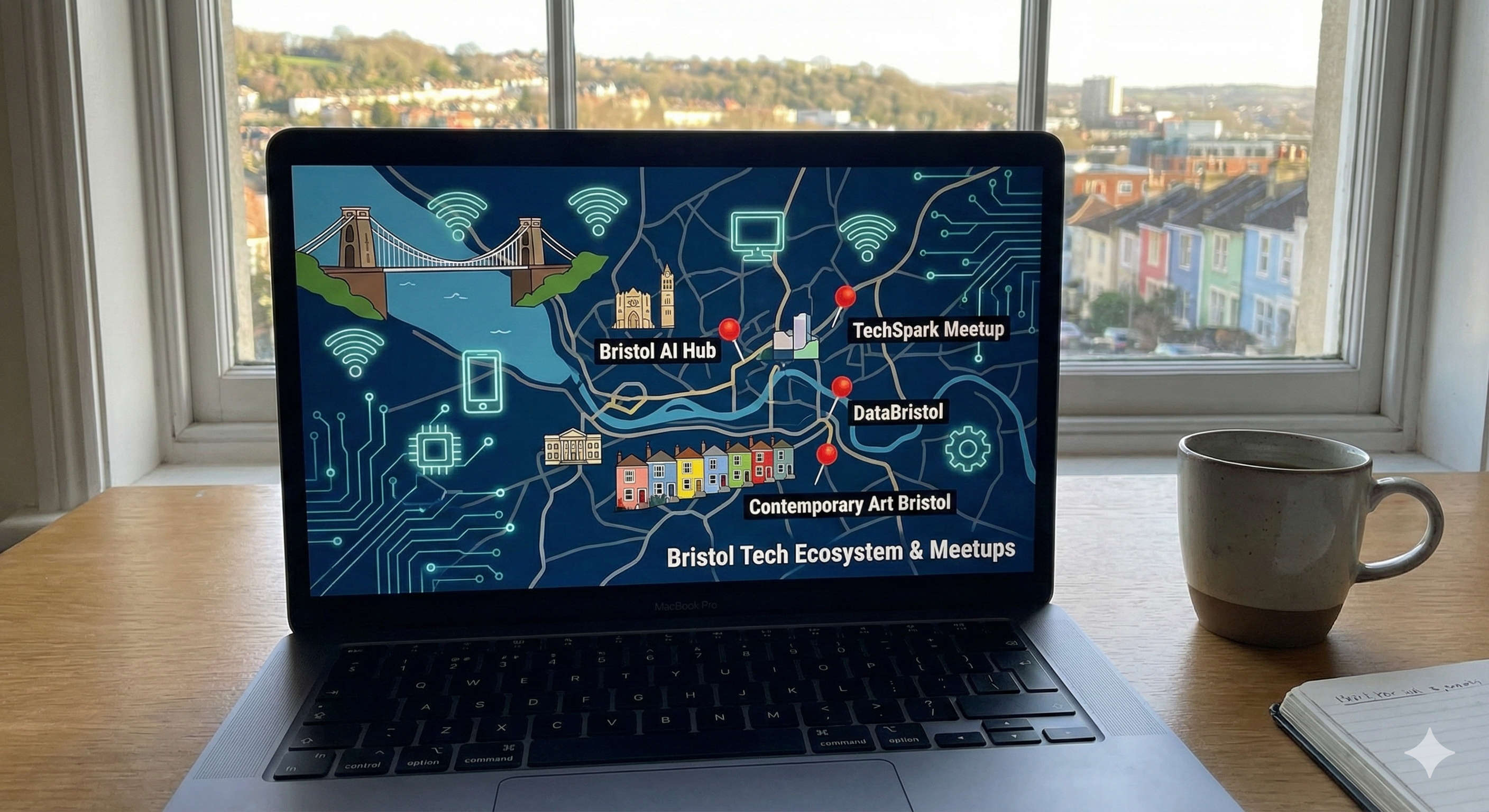
The bits below are Bristol and Bath biased, but you can normally find stuff in the nearest metropolis to where you are.
Eventbrite:
Look out for:
- TechSpark (Bristol/Bath based),
- Knowle West Media Centre (they do a Community x Arts x Tech meetup that’s a bit different), and
- The Bristol Network (startup/tech – don’t worry if you don’t think you are a “startup founder” or “tech entrepreneur” or “investor”; most people there aren’t).
Meetup:
- Basically an alternative to Eventbrite—a bit better in my opinion.
- Avoid any online “Earn money with ChatGPT” events.
- Look for local stuff that aligns with your interests.
- Bristol AI Brainwave,
- DataBristol,
- Mindstone Bristol AI,
- Bristol Machine Learning,
- Contemporary Art Bristol.
University societies and general social stuff:
- Get involved in things outside of tech and AI.
- I’m often in Bristol for gigs—it has an excellent music scene. I wrote a guide to Bristol’s music scene for a newby to Bristol a while back.
Do Some Blogging
For coding projects, do some basic blogging about it. You can use GitHub Pages for a free resource (you can build the blogpost as part of the project repository). Here’s some very old stuff I did. Don’t worry about being perfect—it’s more a quick way for people checking you out for jobs/projects to get a feel for your abilities and interests.
WordPress.com have free blog packages. Just 1 article every 2 months is enough. It’s better to schedule for regularity rather than do a burst then do nothing for a year.
Also: if you’re struggling to understand a core topic on your course, chat it through with a chatbot, note down the YouTube/blog post links that are helpful, then get AI to turn it into a blogpost for your site. See, e.g., Extending Neural Networks.
AI Resources
The field changes every 5 seconds at the moment. Resources, tech folk, and bloggers come and go over time. It’s more about dipping your toe into anything and just reading because it’s interesting. Here’s stuff I’ve found useful over the years – dip in at your leisure.
Getting Started
Start with X and Reddit as sources of cool ideas and projects, but take everything with a pinch of salt – it’s now filled with crypto-tech-bros that seem at least AI-bot/scam/state-sponsored-chaos adjacent.
Start just making notes of stuff on your phone as they grab you in lectures, projects, or life. I have a pinned note I come back to for sources of inspiration. Noting real problems you encounter is the best place to start with projects.
Practice vibe-coding stuff to fix problems you note in daily life. Keep it as simple as possible. Here’s my current workflow and some stuff I built.
Blogs and Writers Worth Following
- Anthropic’s Interpretability Research — excellent deep dives
- Simon Willison’s blog — originally from Bath, great technical writing
- Ethan Mollick — one of the most switched-on of the commercial folk
Learning the Maths
-
Someone wrote a better guide than I could here: The Roadmap of Mathematics for Machine Learning.
-
Also 3Blue1Brown is amazing for explaining difficult concepts in a way that actually makes sense. I wish I’d had this on my course.
Podcasts (for the gym / train / plane)
-
Many Minds — animal intelligence and other great stuff
-
LSE Podcasts — for global/commercial relevance you might not get on your course
-
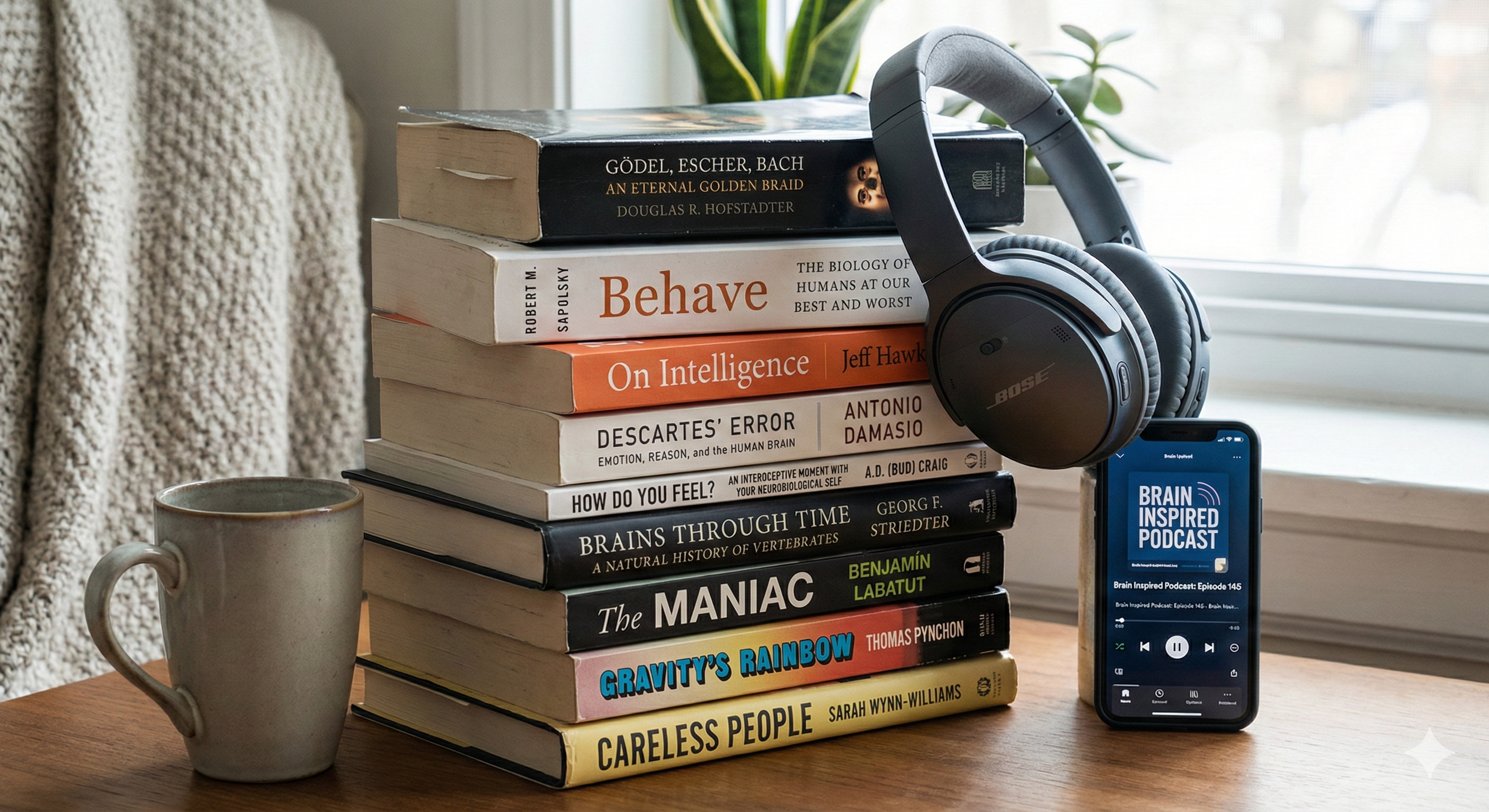
Brain Inspired — a huge back-catalogue of brain and AI chats; all the stuff that’s cool now but won’t be in your course
-
On Humans — on roots of humankind/brains
Video
- Watch The Thinking Game for a good feeling of how it works to work in an AI lab/startup (here Google DeepMind) and “why”.
Classic Resources
-
Deep Learning Book — 10 years old now but I “grew up” with this as the Bible
-
CS231n Convolutional Networks — the key for me to go from “how are conv nets described in papers” to “how are conv nets actually implemented in PyTorch with matmul”
-
Chris Manning’s NLP courses, especially this playlist — I grew up with these before NLP was cool with LLMs
Books
If you sign up for Goodreads or login with Amazon, there are recommendations on my list (sort by rating, start with the 5-star choices).
Some starting points:
- Gödel, Escher, Bach by Doug Hofstadter;
- On Intelligence by Jeff Hawkins;
- Descartes’ Error by Antonio Damasio;
- How Do You Feel? by Bud Craig;
- Behave by Robert Sapolsky;
- Brains Through Time by Georg Striedter (if you can find a copy);
- The MANIAC by Benjamín Labatut (fiction, but on Von Neumann);
- Gravity’s Rainbow by Thomas Pynchon (fiction, but deep ideas about probability and chaos); and
- Careless People by Sarah Wynn-Williams (the bin fire that is Meta).
This post is adapted from mentoring notes. If you found it useful, feel free to share. If you disagree with something or have better resources, I’d love to hear about them.
Remember folks time passes more quickly than you expect…


 Robotic Ape